Samuel Johnson’s private diaries do not sound like lectures from the great authority of 18th-century letters. Across decades, one short resolution keeps returning:
To rise early.
Sometimes it becomes “Rise as early as I can.” Sometimes it specifies six o’clock. The wording changes, but the struggle remains visible from one period of his life to another.
Anyone who has rewritten the same January resolution can recognize the pattern. Johnson’s pages turn it into one of the best-documented recurring struggles in English literary history.
What follows are eight lessons from Johnson’s Prayers and Meditations, edited in the Yale Edition of his works. They sit beside other journaling habits of successful people, especially Benjamin Franklin’s recurring effort to measure virtues he could not perform perfectly.
1. Failed Resolutions Are Not Proof You Are Failing at Life

Johnson is, by almost any measure, one of the most accomplished writers in English. He led the compilation of A Dictionary of the English Language in 1755 with the help of copyists, defining more than 40,000 words. He wrote essays for The Rambler and The Idler. He wrote Rasselas rapidly to help pay the expenses of his mother’s funeral.

He produced an annotated edition of Shakespeare. He was, in his own century, the literary giant.
And here is what he wrote in his diary on his 55th birthday, in 1764:
I have now spent fifty-five years in resolving; having, from the earliest time almost that I can remember, been forming plans of a better life. I have done nothing. The need of doing, therefore, is pressing, since the time of doing is short.
Source: Samuel Johnson, Diaries, Prayers, and Annals, Yale Edition of the Works of Samuel Johnson, Volume I (Yale University Press, 1958).
By 1764, he had already completed the Dictionary and much of the work that established his reputation. Yet in a private religious and moral reckoning, he wrote that he had done nothing.
The voice in a journal that says you are behind, lazy, and out of time is not a neutral biography. Johnson’s sentence belongs partly to a demanding religious practice of self-examination. It reveals real distress, but it does not erase the work he had actually completed.
Try this tonight: open your journal to last January. Read what you wrote about who you were going to be this year. Then write one honest sentence about what you have actually done since. (New to this? Start with journaling for beginners.) The gap is not a verdict on you. It is the gap every ambitious journaler in history has stared at.
2. Keep a Diary Specifically for Reviewing Your Own Mind
Johnson did not keep his diary to record dinners or weather. He kept it because he believed the most interesting subject any person could examine was the inside of their own head. He told friends and correspondents to keep diaries for exactly that reason.
…a man loves to review his own mind.
Source: Quoted in The Yale Edition of the Works of Samuel Johnson, Volume I (Yale University Press, 1958), p. xi.
The line is gentler than a command to examine the conscience. It suggests that looking inward can also involve curiosity, the way a reader follows an unfolding character.
When Johnson sat down with his diary, the question on the page was rarely “What did I do today?” It was closer to “What kind of mind do I have lately, and is it the one I want?” His entries circle around prayer, fatigue, fear of death, gratitude, his marriage to Tetty, his guilt over wasted afternoons. The diary is a mirror held up to the inner weather.
The same impulse runs through the private notebooks of Albert Einstein, where the math is interrupted by personal observations he wanted to keep close to himself, and through Susan Sontag’s lifelong habit of reviewing herself on the page. Different subjects, identical instinct.
Try this tonight: instead of writing “what I did today,” write three sentences that describe the state of your mind today. Tired? Restless? Quietly hopeful? You are not solving anything. You are reviewing.
3. Make the Resolution Anyway, Even Knowing You Will Break It
Johnson’s “Prayers and Meditations” is full of resolutions written for big occasions – the New Year, Easter, his birthday. He returned to the same vows over and over. On September 18, 1760, his fifty-first birthday, he wrote:
SEPT 18. 1760. Resolved D.j.
To combat notions of obligation
To apply to Study.
To reclaim imagination
To consult the resolves on Tetty’s coffin.
To rise early.
To study Religion.
To go to Church.
To drink less strong liquours.
To keep Journal.
To oppose laziness, by doing what is to be done.
Source: Samuel Johnson, Prayers and Meditations, birthday entry of 18 September 1760; transcribed in Diaries, Prayers, and Annals, Yale Edition of the Works of Samuel Johnson, Volume I (Yale University Press, 1958).
This list reappears in different forms across decades. “To rise early.” “To keep Journal.” “To oppose laziness.” He resolved against drinking, against idleness, against scattering his attention. He kept breaking the resolutions. He kept writing them down.
The repetition can look tragic, but it also functioned as a strategy. Johnson kept restating a direction after earlier resolutions failed. That is the same reason a journaling habit survives on returning, not on streaks.
This resembles Benjamin Franklin’s chart of thirteen virtues: another 18th-century writer putting desired behaviors on paper because intention alone was unreliable. The practices are not identical, but both use the page to make recurring failure reviewable.
Try this tonight: write your resolutions for the year and date them today, even if today is mid-May. Resolutions are not the property of January. (If you want somewhere to start, these journal prompts help.)
4. Use Anniversaries as Built-In Journaling Prompts
Johnson did not journal every day. He journaled on hinge dates. His birthday (September 18). Easter. New Year’s Eve. The anniversary of his wife Tetty’s death. He let the calendar do the prompting.
This is one of the easiest journaling habits to copy. Most of us are not going to write 365 days in a row. But almost anyone can write on a handful of fixed dates a year and let those entries form a long, sparse record over a decade.
Look at what those entries do across time. Johnson’s birthday entries from his thirties, forties, fifties, and sixties read together like core samples of the same mind under different weather. The same vows. The same self-reproach. Different physical complaints. A slow softening of tone as he grows older. You cannot read them and not feel the long shape of a life.
Many people give up because they imagine that journaling must be daily. Johnson’s example offers a sparser alternative. Pick three or four anchor dates and write on those. Over time, the entries can still reveal change.
Try this tonight: mark four anchor dates on next year’s calendar – your birthday, New Year, a personal anniversary, one season change. Plan to write a longer entry on each. Skip the rest if you have to.
5. Let the Form Stay as Simple as the Review Requires

Johnson’s surviving entries use several simple forms: a dated prayer, a short list of resolutions, a paragraph of review, or a brief note marking failure. The form follows the purpose. He does not need a decorative system to make the self-examination real.
Modern planners often arrive with someone else’s questions already printed on the page. Johnson is a reminder that journal structure can be much simpler. If the purpose is to review one resolution, a date, one sentence, and the next attempt may be enough.
Try this tonight: divide a page into three lines: what I intended, what happened, what I will try next. Stop there. Add structure only when it earns its space.
6. Write Honestly About What You Cannot Do
Johnson’s diaries are not flattering self-portraits. He records his weight, his lethargy, his guilt, his fear of God’s judgment, his shame at having wasted whole evenings. He records that he failed, again, to rise at six. He records that he prayed earnestly to be delivered from idleness, and then notes, weeks later, that he is still idle.
This is not weakness. A diary that only flatters the writer has little chance to improve self-knowledge. A diary that records actual capacities, including the ones the writer dislikes, can become a tool.
Other working notebooks also preserve gaps between aspiration and practice. Martin Luther King Jr.’s reading and sermon notes show ideas still being developed, while Bruce Lee’s journals place goals beside training plans and self-assessment. The useful record is the one honest enough to be revised.
There is also a quiet practical advantage. The next year, when you reread last January’s vow to rise early, the honest record of how it actually went is the only thing that can change the resolution. Without that record, you make the same vow forever.
Try this tonight: write down one thing you have not been able to do this month. Not a reason. Not an excuse. Just the fact. Sit with it on the page.
7. Treat the Diary as a Companion, Not a Judge

Near the end of his life, Johnson destroyed some private papers. The surviving devotional writings were edited by the clergyman George Strahan and published in 1785 as Prayers and Meditations. The loss means that any account of his diary practice is necessarily based on a partial record.
The surviving entries were not written as a polished public autobiography. They are prayers, resolutions, and private reviews, intimate enough that Johnson did not prepare them for readers. There is a lesson there about knowing who a page is for.
It is easy, in the age of captioned screenshots and “morning routine” content, to slip into writing a diary that is half-performed. Johnson’s example pushes back. A useful journal needs at least some room where no audience has to be impressed. It can be a companion rather than a portfolio.
In The Life of Samuel Johnson, Boswell reports that Johnson “recommended vigorous resolution against any deviation from moral duty.” That is the public Johnson, the moralist. But the diary Johnson is gentler. He resolves, and breaks the resolution, and resolves again. He does not flog himself off the page. He keeps writing.
Try this tonight: if you keep a public-facing journal of any kind – a public note, a shared doc, a captioned photo – try keeping a parallel page that no one will read. Notice how the sentences change.
8. Keep Returning, Even After Long Gaps
Some of the most affecting entries in Johnson’s diary are the ones that begin with an apology to himself for not having written. Months go by, sometimes a year or more, and then he picks up the pen on Easter morning and writes:
Almighty God, who hast preserved me by thy fatherly care through all the years of my past life… grant me from this day to be more diligent in the duties of religion.
Source: Samuel Johnson, Easter entry, Prayers and Meditations (1771); transcribed in Diaries, Prayers, and Annals, Yale Edition of the Works of Samuel Johnson, Volume I (Yale University Press, 1958).
He does not punish himself for the gap. He resumes. The diary is not a streak you can break. It is a room you can leave for a year and walk back into.
The continuity is not an unbroken daily record. It is the returning, a sparse persistence very different from Thoreau’s two-million-word journal. Across decades that produced the Dictionary, The Rambler, and Lives of the Poets, Johnson kept finding his way back to familiar vows and the examination of his own mind.
That kind of return is enough to keep the practice alive.
Try this tonight: if you have not written in your journal for a week, a month, or longer, do not start with an apology. Start with one sentence about today and let the rest of the entry follow. You are not behind. You are back.
Keep Going Beyond Samuel Johnson
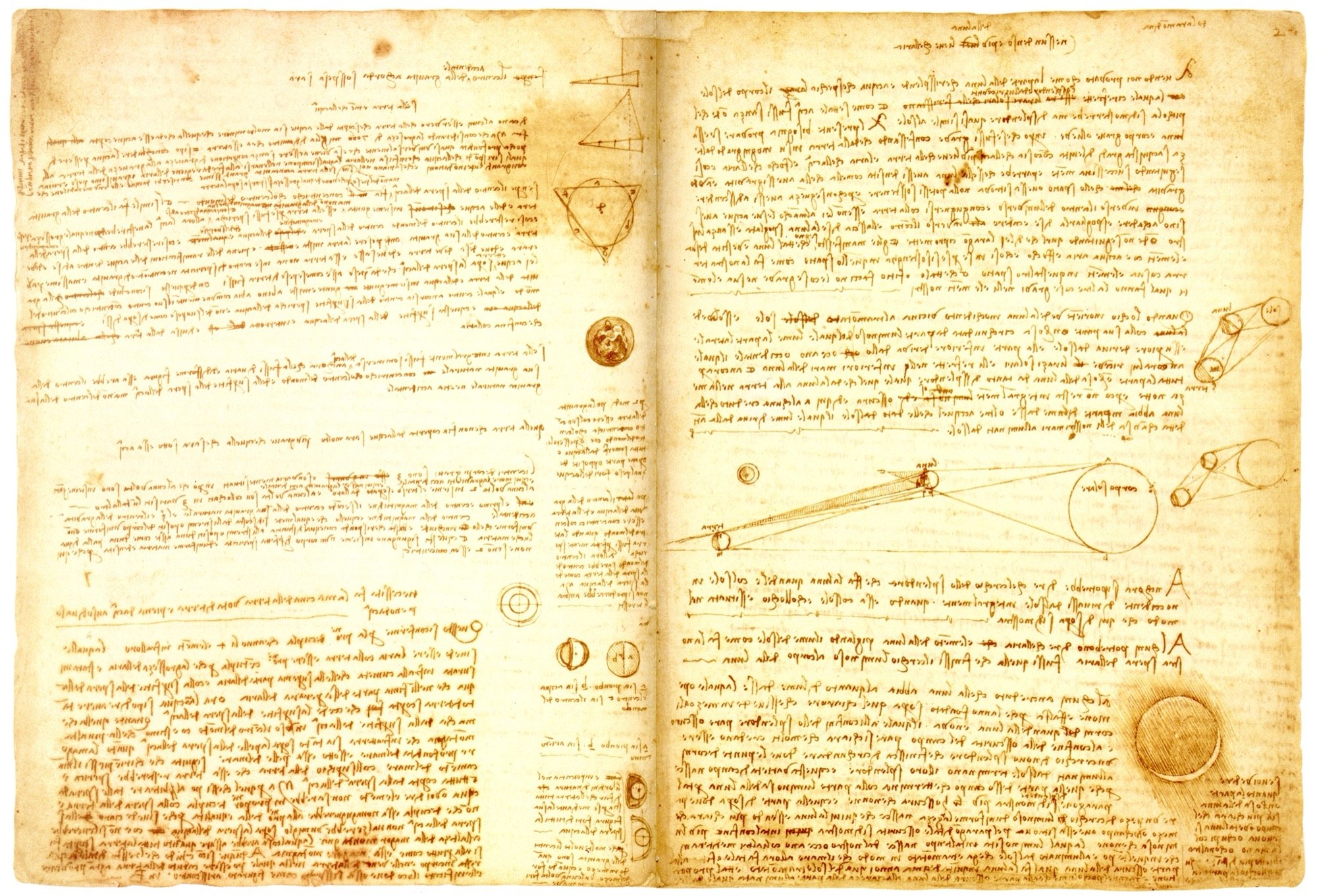
If Johnson’s diaries pulled you in, you might also enjoy reading about the daily journals of Leonardo da Vinci, Edison’s 3,500 lab notebooks, Bruce Lee’s many journals, Einstein’s private notebooks, Benjamin Franklin’s journaling method, and the journals of Martin Luther King Jr.. Each of them treated the notebook the way Johnson did – as a place to review the mind that nobody else gets to see.
Get the Journaling Letter
I write a letter about the journals and notebooks of writers, scientists, and thinkers, with a small idea you can try in your own notebook. If a piece like this one is your kind of reading, you can subscribe here.
Featured image: Samuel Johnson, painted by his friend Joshua Reynolds. A public literary authority whose private diary could be severe about his own shortcomings. Public domain, via Wikimedia Commons.